Skip to content
Open 24/7Upfront pricing
Call now (212) 555-0188
New York City, NY (212) 555-0188

Emergency plumbing in NYC

Emergency plumber for New York City homes and buildings

Water coming through a ceiling or a toilet that will not stop overflowing needs action now. Call or send a request and ask for a call back.

(212) 555-0188 Call now
  • Call or send a short request
  • Plain explanation before repairs begin
  • Guidance on shutoffs and building contacts
Request a plumber
How soon do you need help?

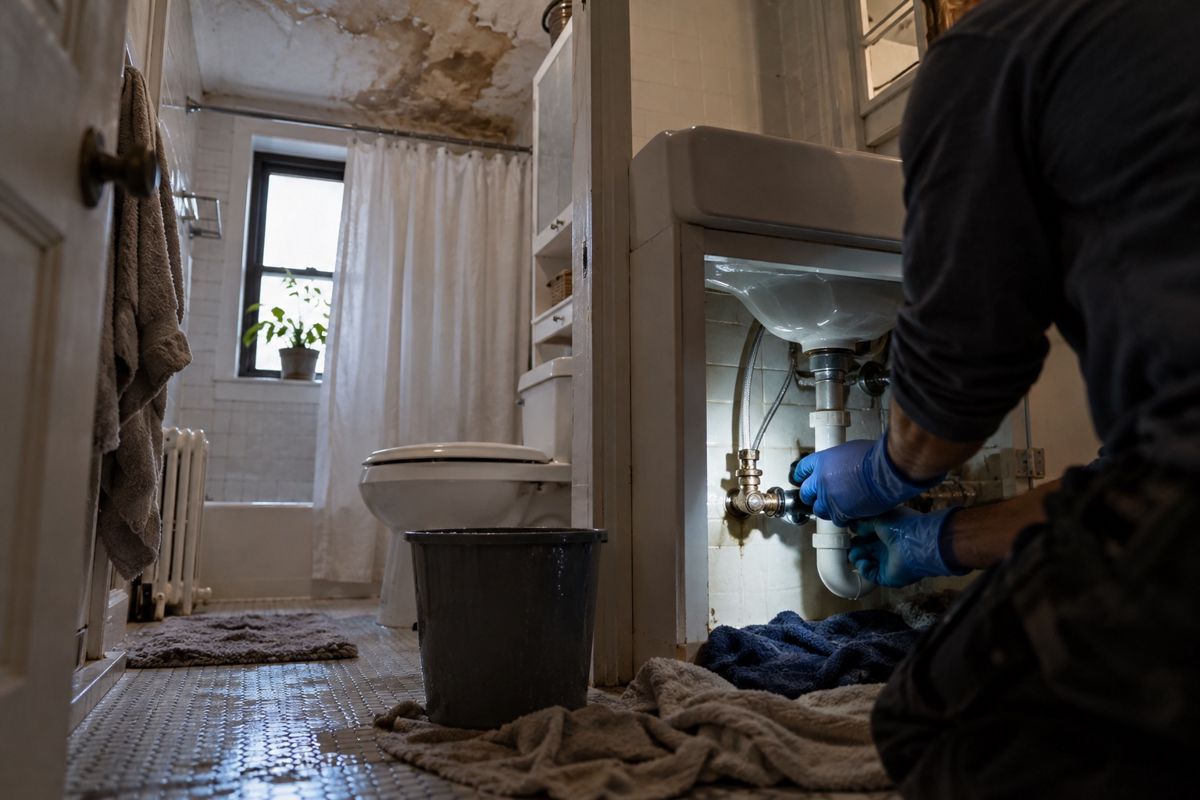
Plumber's hands closing a shutoff valve under a sink beside a water-stained ceiling

What counts as a plumbing emergency in New York City?

A plumbing emergency is any problem where water or sewage is doing damage right now, or where you cannot safely use the home. If you are searching for an emergency plumber New York City residents can contact quickly, these are the situations that usually qualify.

  • A pipe that has burst or is spraying water inside a wall, ceiling or floor.
  • Sewage coming up through a floor drain, tub or toilet.
  • A toilet or tub overflowing that will not stop when you close the valve.
  • A water heater leaking heavily or showing signs of overheating.
  • No water at all in your unit while neighbors still have it.

The smell of gas is different. Leave the building and call your gas utility or 911 first.

A dripping faucet or a slow drain can usually wait for a regular visit. Water on the move cannot. In a multi-unit building, a small leak can turn into a claim from the neighbors below within hours.

What should I do before the plumber arrives?

Your first job is to slow the water. A few calm minutes can save a ceiling.

  1. Find the shutoff. Look under the fixture first. Then look for the unit shutoff, often near the kitchen or bathroom, and the main valve for the apartment or house.
  2. Tell the building. Call the superintendent or managing agent. They know where the riser valves are and can often close the line that feeds your unit.
  3. Protect what you can. Move rugs, electronics and paperwork. Put buckets under drips. Do not stand in water near outlets.
  4. Turn off the water heater if the tank is leaking and you can reach the control safely.
  5. Take photos and short videos. Insurers, boards and neighbors often ask for them later.

If you cannot find a shutoff, do not force old valves. Many valves in older buildings have not moved in decades and can snap. Leave that to the plumber and the building staff.

Which emergency problems are common in older New York buildings?

Much of the city's housing was built long before modern plumbing materials. That shapes the emergencies that come up most.

Leaking or cracked cast-iron stacks

Cast iron has served buildings for a century, but joints loosen and pipe walls thin with age. A stain that spreads on a ceiling below a bathroom often points to a stack or a drain connection. Related blockages are covered on our drain cleaning page.

Burst or leaking supply pipes

Older galvanized steel corrodes from the inside and can fail at a fitting. Pipes in unheated hallways, exterior walls and the basements of houses in the outer boroughs can freeze in a hard winter and split.

Failed water heaters

A tank at the end of its life can leak with little warning. See water heater repair and replacement for what a swap involves.

A fair price depends on what is actually wrong. Be careful with anyone who names a number before understanding the problem. These factors usually decide the final bill.

  • The cause. A failed valve is a smaller job than a split pipe inside a wall.
  • Access. Opening a wall, reaching a shared riser or working in a crawl space takes time. Patching drywall afterward may be a separate trade.
  • Pipe material and age. Old threaded steel or cast iron can be harder to repair than newer copper or PEX.
  • Building rules. Elevator reservations, work-hour limits and insurance paperwork add steps.
  • Permits. Some repairs need a permit, which is filed by a licensed master plumber.
  • Time of day. After-hours work may cost more. Ask before you agree.

Ask for the price in writing before any non-urgent work begins. After a stopped leak, ask what was done and what still needs a follow-up visit. If the cause turns out to be hidden pipe damage, see leak detection and repiping.

What does New York City require, and when should I call?

Plumbing rules in the city are strict because the buildings are dense. As general guidance, plumbing work usually has to be done by or under a licensed master plumber, and many repairs need a permit filed with the Department of Buildings. Small fixes, such as replacing a faucet cartridge, often do not. Rules change, so ask the plumber what applies to your job and confirm it with your building or the city.

Co-ops and condos often add their own rules. Many require notice to the managing agent, a certificate of insurance from the contractor, and limits on work hours. In a true emergency, stopping the water comes first. The paperwork can follow, but tell the building as soon as you can.

Call when water is moving where it should not, when a drain backs up in more than one fixture, or when you are unsure whether the plumbing is safe to use. Go back to the home page to send a request, or use the phone number at the top of the page.

Open 24/7 Upfront pricing Clear communication Local plumbers

Questions about emergency plumber in New York City

How fast can a plumber get to my apartment?

Timing depends on the borough, traffic, the building and how many urgent jobs are open. We cannot promise an arrival time before we talk to you. Call or send a request, describe what is happening and ask for a realistic estimate on the phone. In the meantime, shut off the water at the fixture or at your unit valve if you can.

Should I shut off the water for the whole building?

No. Close only the valve that serves your fixture or your unit. Riser and main valves feed other apartments, and closing them without telling anyone can cause problems for neighbors. Ask the superintendent or managing agent to close the building valves if the leak cannot be stopped at your level.

Will insurance cover a burst pipe?

It depends on your policy. Sudden and accidental water damage is often covered, while slow leaks over months often are not. Renters, owners and building policies all work differently. Call your insurer early, keep photos, and keep the plumber's written description of the cause and the repair. Those records help with any claim.

What if the leak comes from the apartment above?

Tell the superintendent or managing agent right away and ask them to contact the unit above. Photograph the damage and the source if you can see it. A plumber can protect your unit and trace the path of the water, but work inside a neighbor's apartment needs their permission and often the building's involvement.

What if sewage is coming up from a floor drain or tub?

Stop using water in the unit, keep children and pets away, and call. A backup in several fixtures can mean a blocked shared stack or a house sewer line problem, which may involve the building. Do not pour chemical cleaners into a backed-up drain, because they can splash and complicate the repair.

How soon do you need help?

Ready when you are. Call now or request a quote online.

How it works

  1. Call or tap for help

    Tell us what is wrong. We answer around the clock.

  2. Plumber dispatched

    The nearest plumber heads your way with a stocked van.

  3. Fixed with a written price

    You approve the price before any work starts.

Takes about 30 seconds. Request a plumber