Skip to content
Open 24/7Upfront pricing
Call now (212) 555-0188
New York City, NY (212) 555-0188

Water heaters in NYC

Water heater repair and tankless replacement in New York City

No hot water, a leaking tank or an old unit that keeps failing. Describe what you have and we will explain the options for your building.

(212) 555-0188 Call now
  • Tank and tankless units in apartments and houses
  • Repair or replace advice in plain words
  • Clear notes on permits, gas and building approval
Request a plumber
How soon do you need help?

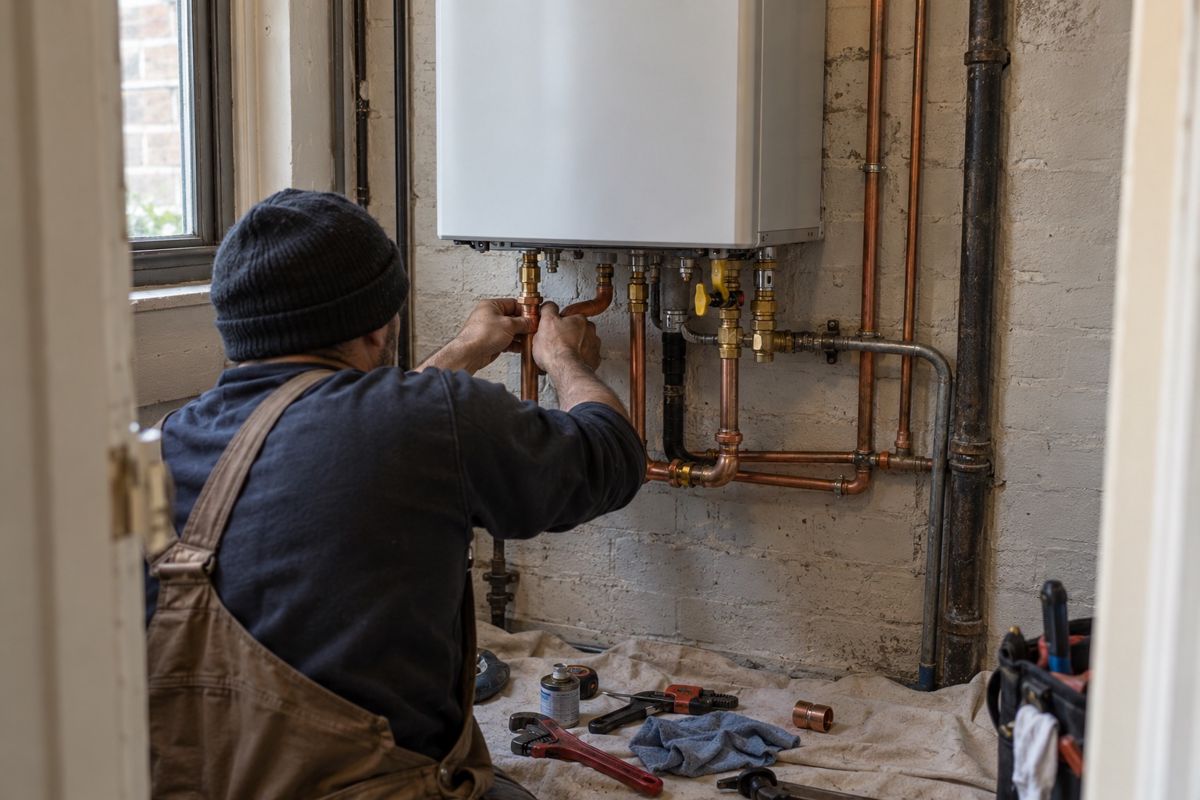
Plumber's hands connecting copper pipe to a tankless water heater on a brick wall

What does water heater repair involve in New York City?

When the hot water stops, the cause is often a small part. For water heater repair New York City homes need, the first step is figuring out which kind of system you have, because that changes everything.

In many houses the heater is a gas or electric tank in the basement or a utility closet. In many apartments it is a small electric tank under a counter or in a closet. In larger buildings, hot water may come from a central boiler, which means your unit may not have its own heater at all. If that is your situation, call the superintendent first.

On a gas tank, common repairs involve the thermocouple, igniter, gas valve or thermostat. On an electric tank, heating elements and thermostats wear out. A pressure relief valve that drips, or a tank that leaks from the body, is a different story. A leaking tank cannot be repaired and has to be replaced.

Should I repair or replace my water heater?

Repair makes sense when the tank is sound and the failed part is inexpensive to swap. Replacement makes sense when the tank itself is failing.

  • Age. Tank heaters often last roughly ten years, give or take. An older unit with a new problem is a poor bet.
  • Leaks from the tank body. Water pooling under the tank, rust streaks or a wet floor usually mean the end.
  • Repeat repairs. If you have paid for two fixes in a year, the next one is coming.
  • Rust-colored hot water. This can point to corrosion inside the tank, although rusty pipes can cause it too.
  • Noise. Popping or rumbling often comes from sediment on the bottom of the tank.

If a tank is actively leaking, close the cold water supply to it, turn off its power or gas, and read our notes on emergency plumbing. Water damage costs more than any heater.

Is a tankless water heater right for a New York apartment or house?

Tankless units save floor space and do not run out of hot water in the middle of a shower. In a crowded city, that appeals to many owners. But they are harder to fit into older buildings than the brochures suggest.

Gas tankless

A gas tankless unit needs a gas line large enough to feed it, plus proper venting to the outside. In an apartment, a vent through the facade may not be allowed or practical. In a house, the gas line sometimes needs to be upsized.

Electric tankless

These need a lot of electrical capacity. Many older apartments and houses do not have spare capacity at the panel, and upgrading it adds cost and coordination.

A plumber should check gas supply, venting, electrical capacity and the drain for condensate before recommending a tankless unit. If any of these is a problem, a new tank may be the better answer.

No honest plumber can name the price of a water heater job without knowing the building. These are the main factors.

  • The type and size of the new unit.
  • Whether the new heater fits the old location or needs relocating.
  • New venting, gas line, electrical or water connections.
  • Shutoff valves that no longer close and need replacing first.
  • Permit filing and any inspection.
  • Removal and disposal of the old tank, including getting it out of the building.

A like-for-like tank swap is commonly finished in one visit. A change to tankless, or a job that needs new venting or gas piping, takes longer and may involve sign-offs. Plan for the water to be off for part of the day, and tell neighbors if the shutoff affects a shared line.

If a leaking heater has already damaged the area, see leak detection and repiping for what hidden water damage can involve.

What rules and building approvals apply?

Gas appliances are regulated closely in New York City. As general guidance, installing or replacing a gas water heater is work for a licensed master plumber, and many jobs need a permit. Gas service may have to be shut off and restored by the utility, so ask your plumber how that will be handled.

Co-ops and condos usually have their own rules. Replacing a heater inside your unit may need approval from the board or managing agent, a certificate of insurance from the contractor, and agreed work hours. Some buildings limit the type of heater you can install, or require the old one to be removed through the freight entrance.

Ask early. A short email to the managing agent before the job can save a day of delay. For questions about your own building, you can start from our home page and describe your setup.

What you can expect

  1. Open 24/7

  2. Upfront pricing

  3. Clear communication

  4. Local plumbers

Questions about emergency plumber in New York City

Why is there no hot water in my apartment?

It could be your own heater, a tripped breaker or a pilot that went out. In a building with central hot water, the boiler or a riser may be down for everyone. Check with a neighbor or the superintendent before assuming the problem is in your unit. If it is your own heater, a plumber can usually find the cause quickly.

How long does a tank water heater last?

Many tank heaters last around ten years, though water quality, usage and maintenance matter. Signs of an older unit include rust at the base, popping sounds, and repeat repairs. Once a tank starts to leak from the body, it cannot be fixed and has to be replaced.

Can I install a tankless heater in my co-op or condo?

Sometimes, but it depends on gas capacity, venting, electrical capacity and your building's rules. Many buildings restrict what can be changed and may require board approval and insurance paperwork. Ask your managing agent first, then have a plumber check whether your unit can support it.

Do I need a permit to replace a water heater?

Often yes, especially for gas units, and the filing is generally handled by a licensed master plumber. Rules change and depend on the exact work, so ask the plumber what applies and confirm with the city if you want to be sure. Be wary of anyone who says permits never matter.

What should I do if my water heater is leaking?

Close the cold water valve above the tank and turn off the power or gas. Place a pan or buckets under the leak and mop up standing water. If the leak is heavy, tell the building and call a plumber right away. A slow drip from the relief valve is less urgent but still needs attention.

How soon do you need help?

Ready when you are

Call now or request a quote online.

(212) 555-0188

How it works

  1. Call or tap for help

    Tell us what is wrong. We answer around the clock.

  2. Plumber dispatched

    The nearest plumber heads your way with a stocked van.

  3. Fixed with a written price

    You approve the price before any work starts.

Takes about 30 seconds. Request a plumber