Skip to content
Open 24/7Upfront pricing
Call now (212) 555-0188
New York City, NY (212) 555-0188

Brownstone blocks beside Prospect Park

Plumber in Park Slope for brownstones and rowhouse sewer lines

Plumbing for Park Slope brownstones, limestone rowhouses and apartment buildings, including drains and house sewer lines. Request a quote and we confirm availability.

(212) 555-0188 Call now
  • Houses, brownstones, co-ops, condos and walk-ups
  • Written quote before non-emergency work starts
  • Clear advice on permits and building rules
Request a plumber
How soon do you need help?

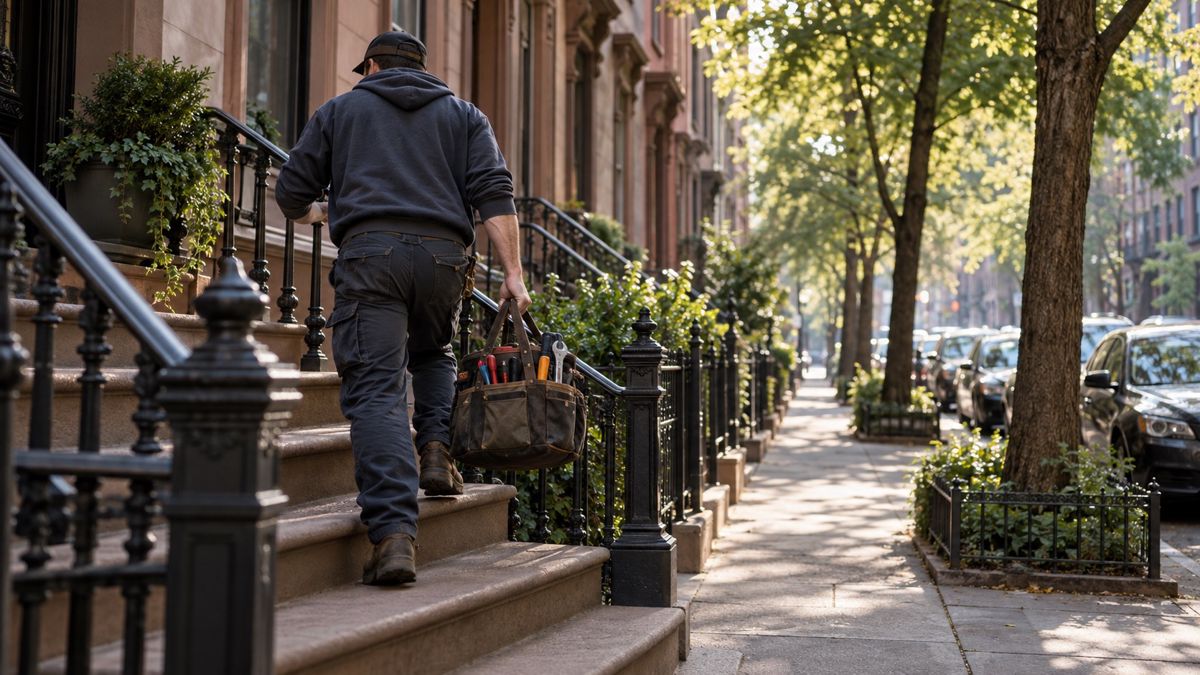
Plumber carrying a tool bag toward a Brooklyn brownstone front stoop in morning light

Open 24/7 Upfront pricing Clear communication Local plumbers

What to expect from plumbing in a Park Slope brownstone

Park Slope is known for tree-lined blocks of brownstones and limestone rowhouses, with larger prewar apartment buildings along Prospect Park West and the avenues. Many of the rowhouses are old enough to have had several rounds of plumbing changes, and many have been divided into apartments or turned back into single-family homes.

Typical issues include a basement drain that backs up, supply lines that were partly replaced and partly left alone, and an old water heater tucked into a garden-level utility room. A good first visit looks at the whole system instead of one fixture.

Street trees, attached houses and the line to the street

The blocks around Park Slope are known for mature street trees, and tree roots can find their way into older sewer connections at the joints. Because the houses are attached in rows, a house connection sometimes sits close to a neighbor's, and in some cases lines share a trench or a wall.

That means a repeated backup should not be treated as a simple clog. If clearing the line gives only short relief, the pipe may be cracked, offset or filled with roots. A camera inspection tells you what is really happening before anyone starts digging in the sidewalk.

Services for Park Slope homes and apartment buildings

Here is how our five services map to common Park Slope needs.

Many Park Slope houses need more than one of these, so we can plan them in a sensible order.

Rowhouse plumbing has its own cost drivers. The pipe may be shallow or deep, and the sidewalk and street may need to be reopened if work extends past the property line.

  • Depth and length. A longer or deeper run takes more time to reach and to restore.
  • Street and sidewalk. Work outside the lot line usually involves city permits and restoration.
  • Shared connections. A line used by two houses can mean talking to a neighbor.
  • Interior finishes. Plaster, tile and original woodwork all add care to the job.

We discuss each of these when you ask for a quote.

Permits and preparation for brownstone owners

Plumbing in the city generally goes through a master plumber, and a new sewer connection or gas work usually needs a permit. Work in the street or sidewalk adds city requirements of its own. In a landmarked district, exterior changes may bring extra rules, so check before planning anything visible from outside.

On the day, clear the basement path, move stored items away from the utility area, and make sure someone can give access to the cleanout or the main shutoff. Photos of earlier repairs, if you have them, help.

How a Park Slope plumbing request works

Call (212) 555-0188 or send the form. We serve Park Slope and confirm availability once we hear the details.

  1. Say whether you own a house or a unit, and give the nearest avenue.
  2. Describe the symptom and when it started, including any recent heavy rain.
  3. Tell us if the basement has a floor drain or a cleanout you can reach.
  4. We advise whether a camera look or a hands-on visit makes more sense first.
  5. You get a written quote for non-emergency work before it begins.

Ask about anything on the quote that is unclear. We would rather explain a line item than have it surprise you later.

How soon do you need help?

Questions about Park Slope

Can tree roots really damage a house sewer line in Park Slope?

Yes, roots can enter joints in older clay or cast iron pipe, especially where a joint has shifted slightly. Once inside, they grow and catch debris. Cutting them clears the line for a while, but a lasting fix may involve lining or replacing the damaged section. A camera inspection shows which situation you have.

My basement drain backs up only after heavy laundry loads. Is that a clog?

It can point to a partial blockage or a pipe with too little slope, since a small flow passes but a large surge does not. Roots, grease and settled sections are common causes. Avoid running several fixtures at once and book an inspection soon. A single cleaning may help for a while, but it is not always the full answer.

Do I need a permit to replace a water heater in a brownstone?

Often some kind of filing or approval applies, especially for gas units, and the rules depend on the work. A like-for-like swap is treated differently from moving a heater or changing the fuel. Ask us what your job involves, and check with your insurer or building if the home is a co-op or condo.

Is trenchless repair possible on a rowhouse sewer?

It often is, because lining or bursting can avoid digging up the whole length, but the pipe must be in suitable shape and reachable from a cleanout or a small pit. Collapsed pipe or deep offsets can require traditional digging. A camera survey is the practical first step, and it shows how long the damaged section really is.

What should I photograph before a plumber visits my Park Slope home?

Take pictures of the affected fixture, any ceiling or wall stains, the water heater label and the basement cleanout if you have one. Note when the problem started and what changed beforehand. Clear, simple photos let us plan the right tools and materials and save time on the first call and on the visit itself.